

The Ultimate Guide to Discreet Shoe Inserts
The right shoes can complete an outfit, but the right shoe inserts can make the pair much easier to actually wear. Whether your heels put too much pressure on the ball of your foot, your flats need more support, or your favorite pumps keep slipping at the heel, there’s likely an insert designed to address that specific problem.
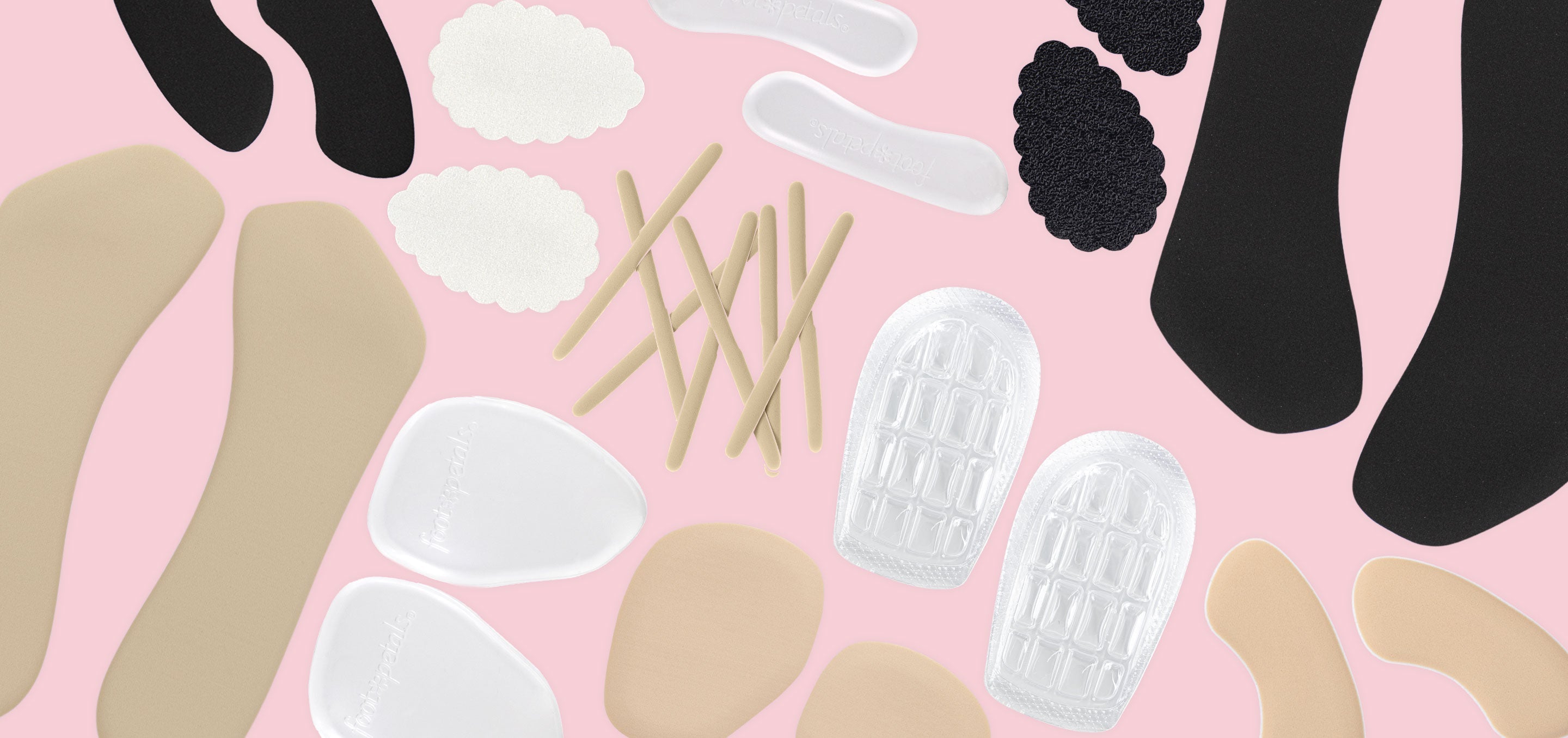
But not every shoe insert does the same job. Full and partial cushion insoles, heel inserts, arch cushions, and ball-of-foot cushions all target different areas of the foot. Choosing the right one starts with identifying where your shoes are uncomfortable and what you want to change about their fit.
What Is a Shoe Insert?
Shoe insert is a broad term for a product placed inside a shoe to alter cushioning, support, fit, or comfort. Some inserts cover most or all of the footbed, while others are small enough to target one specific pressure point and that distinction matters. If a shoe rubs at the back of your heel, adding cushioning beneath your entire foot probably isn't the most direct solution. Likewise, a heel grip won't address pressure under the ball of your foot.
It’s also helpful to distinguish everyday shoe cushions from prescription or custom orthotics. The American Podiatric Medical Association explains that custom orthotics are prescription devices made specifically for an individual’s feet and are used to address particular medical conditions. Over-the-counter inserts are different and can provide cushioning or support, but they aren't custom medical devices. For everyday shoe discomfort and fit issues, the goal is often much simpler: put cushioning or support exactly where your shoe needs it.
What Are the Different Types of Shoe Inserts?

Walk down a shoe-care aisle and you may see everything from cushioned insoles to tiny heel pads. Understanding the main categories makes choosing between them much easier.
Ball-of-Foot Cushions
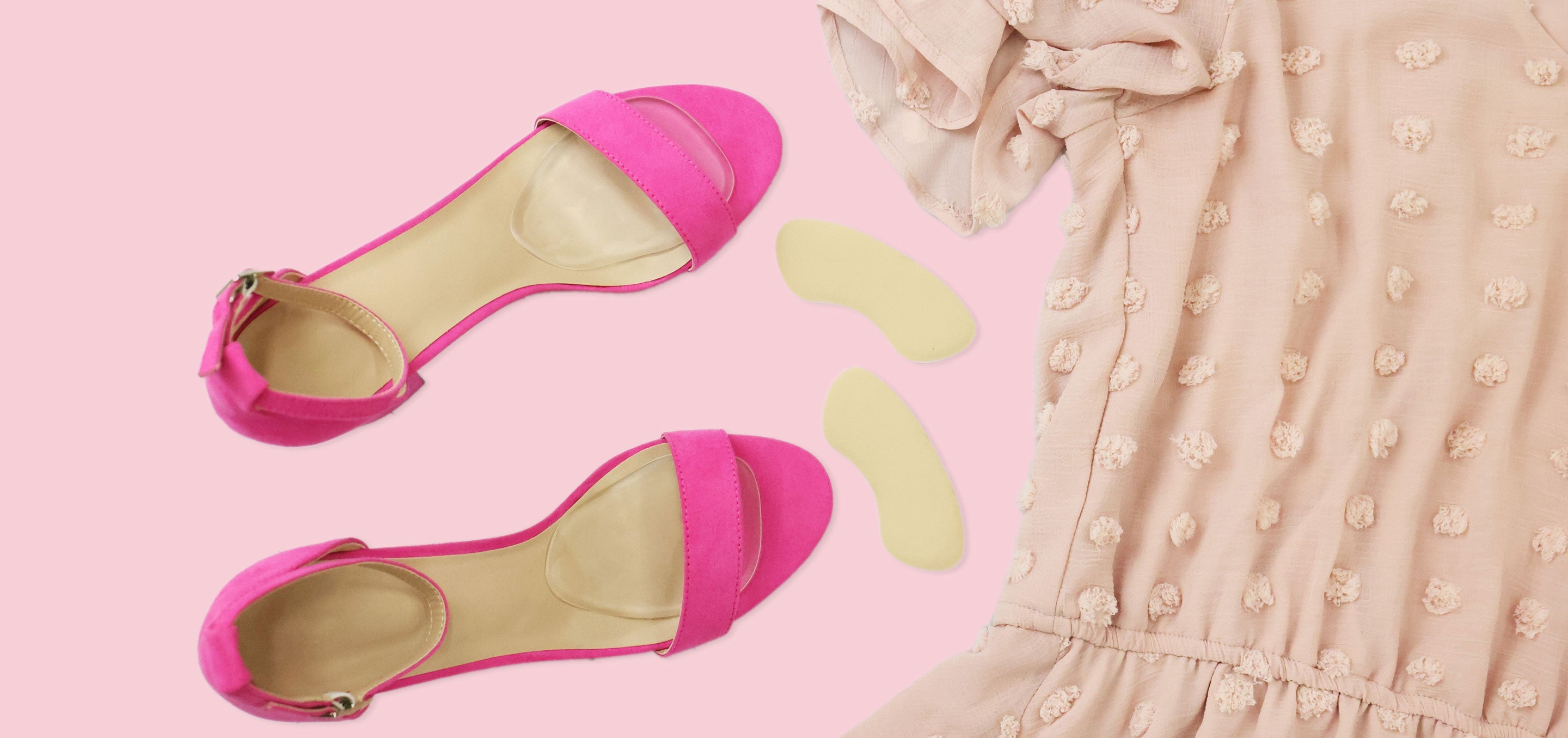
Ball-of-foot cushions sit beneath the forefoot, where pressure tends to build when wearing heels and other thin-soled shoes. They can be especially useful when your feet slide forward inside your shoes. Foot Petals Ball of Foot Cushions are designed to help keep feet from sliding forward while adding shock-absorbing cushioning without creating unnecessary bulk. This makes them a natural choice for pumps, wedges, sandals, flats, and other shoes where you want targeted cushioning but don't have room for a full insole.
Back-of-Heel Inserts
Not all heel inserts sit underneath your heel. Back-of-heel cushions attach inside the rear of the shoe and are intended to address heel slipping and rubbing. They're particularly helpful when a shoe is slightly loose at the heel or when a stiff back creates friction as you walk. Foot Petals Back of Heel Cushions have a slim profile and can be positioned at the back or top of a shoe to improve fit and reduce rubbing. For shoes where visibility matters, clear gel versions offer another discreet option.
Under-Heel Cushions and Heel Cups
Under-heel inserts serve a different purpose. Instead of sitting behind the heel, they sit beneath it to provide cushioning at heel strike. This distinction is worth making because people searching for “heel inserts” may be trying to solve two very different problems. If your heel slips out of the shoe, look at a back-of-heel cushion. If the bottom of your heel needs additional cushioning, an under-heel cushion or heel cup is the more relevant option.
Arch Support Cushions
If a shoe feels flat or leaves your arches tired after extended wear, a targeted arch cushion can add support without requiring a full-length insole. Foot Petals Arch Support Cushions are designed to distribute weight more evenly and reduce foot fatigue while remaining slim enough for a variety of footwear, including heels, flats, boots, wedges, slides, and slip-ons. That versatility makes targeted arch cushions particularly useful for fashion shoes that don't have enough interior room for a bulky insert.
3/4 Cushion Insoles
Sometimes discomfort isn't limited to one spot. That's where a longer insole shoe cushion can make sense. A 3/4 insert provides cushioning from the heel through the ball of the foot while leaving the toe area uncovered. That can be especially helpful in dress shoes because you get more coverage without adding material around the toes. Foot Petals 3/4 Insert Cushions are designed to provide cushioning from heel to ball of foot while helping reduce forward sliding.
Shoe Inserts for Heels: What Should You Look For?
Heels deserve their own strategy because the angle of the shoe changes where pressure occurs. As heel height increases, more load shifts toward the forefoot, which is one reason the ball of the foot can become uncomfortable during extended wear.
The best inserts for heels are therefore usually targeted and slim. Fashion heels often have less interior space than sneakers or other casual shoes, so adding a thick full-length insert can make an already close-fitting shoe feel tighter. Start by identifying your main problem:
- Pressure at the ball of the foot: Try a ball-of-foot cushion.
- Foot sliding toward the toes: Look for forefoot or 3/4 cushioning designed to help keep the foot in place.
- Heel slipping or rubbing: Choose back-of-heel inserts.
- Not enough arch support: Add a targeted arch cushion.
- Multiple pressure points: Consider a 3/4 insert for broader cushioning.
You don't necessarily need to add every type of cushion to one shoe. Start with the most noticeable problem and see how the shoe feels after addressing it.
Cushion Insoles vs. Targeted Shoe Cushions
One of the biggest decisions when shopping for inserts is how much of your foot needs additional cushioning. Cushioned insoles provide broader coverage and may make sense when a shoe feels uncomfortable across several areas. Targeted cushions focus on one specific area, such as the heel, arch, or forefoot.
A boot with plenty of interior room may accommodate a larger insert comfortably. A strappy heel, pointed-toe pump, or ballet flat may benefit more from smaller cushions that leave the rest of the shoe unchanged. A 3/4 insert falls between the two. It provides more coverage than a spot cushion but stops before the toes, making it a useful option when you want cushioning through much of the foot without crowding the toe box.
Foam vs. Gel Shoe Inserts: What's the Difference?

Material is another consideration when choosing a shoe insert. Foot Petals' premium foam cushions are lightweight and breathable and are designed to provide shock absorption while maintaining a slim profile. Many of the foam products use adhesive backing for lasting placement within a particular pair of shoes.
Foot Petals gel cushions are designed for pressure distribution and shock absorption while remaining discreet. Several gel products also use washable adhesive that allows the cushions to be moved between pairs. That means the decision may come down to how you plan to use the insert. If you're customizing one pair you wear frequently, an adhesive foam cushion can stay in place. If you'd prefer to move the same cushion among several pairs, a reusable gel option may be more convenient.
How to Put Shoe Inserts in Correctly
Even a great shoe cushion won't work as intended if it's placed in the wrong spot. Before removing any adhesive backing, put the shoe on and notice exactly where you feel pressure, slipping, or rubbing. Then position the cushion inside the shoe and test the placement when possible before securing it. For paired cushions, take time to position each one according to your individual feet rather than assuming they need to sit in exactly the same place in both shoes.
Once positioned, follow the product's instructions for securing and caring for the insert. Some adhesive cushions are intended to stay in one shoe, while certain reusable gel products can be washed to restore adhesion and transferred between pairs. Most importantly, an insert shouldn't make your shoe painfully tight or create a new pressure point. If it does, reassess the placement or try a slimmer solution.
Can Shoe Inserts Fix Shoes That Don't Fit?
Shoe inserts can improve certain minor fit issues, but they aren't a substitute for buying the correct shoe size. A back-of-heel cushion may help a slightly loose heel feel more secure. A forefoot cushion may help reduce forward sliding. But an insert shouldn't be used to force your foot into a shoe that's significantly too small, too narrow, or otherwise poorly shaped for your foot.
If your toes are cramped, you experience numbness, or a shoe causes significant or persistent pain, the answer may be a different size or style rather than more cushioning. That distinction is important: inserts should make wearable shoes more comfortable, not make an unsuitable shoe wearable at any cost.
When Should You Replace Shoe Inserts?
There's no universal replacement schedule for every shoe insert because lifespan depends on material, frequency of wear, care, and whether the product is designed to be reusable. Instead of relying only on the calendar, inspect your inserts periodically. Consider replacement if cushioning has visibly deteriorated, an adhesive product no longer stays securely positioned, the insert is damaged, or it no longer provides the comfort you originally noticed. Always follow the care and replacement guidance for the specific product you're using.
When Shoe Discomfort Needs More Than an Insert
Over-the-counter shoe cushions are designed for everyday comfort and fit, not to diagnose or treat medical conditions. If you have persistent foot pain, significant swelling, numbness, an injury, or discomfort that continues regardless of your shoes, consider speaking with a qualified healthcare professional or podiatrist. The American Podiatric Medical Association notes that prescription custom orthotics are specifically made to match an individual's foot and address particular medical needs. Knowing when a shoe cushion is appropriate and when your feet need professional attention is part of choosing the right support.
Finding the Right Shoe Insert Starts With Your Shoes
There isn't one “best” shoe insert for every foot or every pair of shoes. The right choice depends on what you're wearing and what you're trying to solve. Instead of automatically reaching for a full cushioned insole, identify the source of the problem first. If your heels slip, focus on the back of the shoe. If your arches feel unsupported, target the arch. If high heels leave the front of your feet uncomfortable, look at ball-of-foot cushioning. And if you want support across multiple areas without crowding your toes, a 3/4 insert may be the better fit.
The goal is simple: make the shoes you already love easier to wear. With the right cushioning in the right place, a small adjustment can make a noticeable difference in how confidently and comfortably you move through the day.
Shoe Insert FAQs
Q: What type of heel inserts should I use if my shoes slip?
A: If the back of your foot lifts out of the shoe as you walk, choose back-of-heel cushions designed to improve fit and reduce rubbing.
Q: Can you put shoe inserts in high heels?
A: Yes, but choose inserts designed to work within the limited space of dress shoes. Slim ball-of-foot, arch, back-of-heel, and 3/4 cushions can provide targeted comfort without the bulk of some full-length insoles.
Can shoe inserts make shoes that are too small fit better?
Q: No, inserts take up space inside a shoe and aren't a solution for footwear that's too small or painfully tight. If a shoe causes cramping, numbness, or significant pain, consider a different size or style instead.


